Eyjafjallajökull
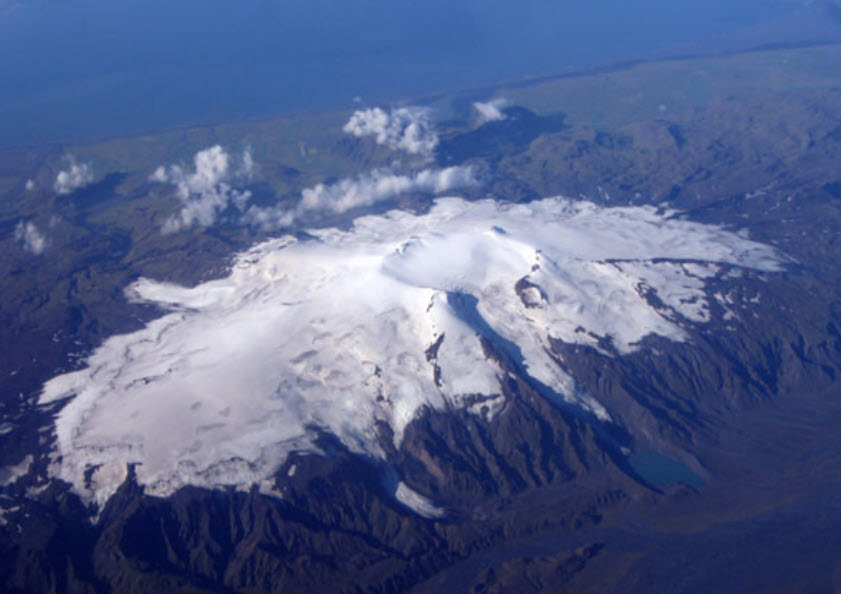
Eyjafjallajökull volcano is in the mountain range of Eyjafjöll and bears the same name as the glacier that covers parts of it. The volcano is ridge shaped, being elongated in an east-west direction and the highest point of it is 1651 m above sea level. The highest point is on the edge of the 2.5 km wide caldera of the volcano and the eastern part of the caldera can be seen from the view point. The system has been active for over 700.000 years and two short fissure systems extend from the caldera, one to the west and the other to the east in the direction of Katla Volcano. The Eyjafjallajökull volcano is partially covered by a glacier of the same name, which is the 6th largest glacier in Iceland and covers an area about 67 km2. The thickest parts are about 200-250 m and are within the caldera of the volcano. The caldera has an opening to the north, where Gígjökull outlet glacier flows out from it. The flanks of the volcano have been eroded heavily by glaciers and rivers, and wave erosion occurred on the west and the south sides at the end of the last ice age. The volcano is made out of layers of lavas, cube jointed basalt layers, and tuff layers, which can easily be seen at Þorvaldseyri viewpoint where the layering in Mt. Steinafjall is exceptionally beautiful. These alternating layers stem from the eruption history of the volcano, as it has been active while Iceland went through faces of glaciation and deglaciation. Eyjafjallajökull volcano has only four known eruptions during historical times, once during the 10th century C.E., then in either 1612 or 1613 C.E., in 1821–1823 C.E., and then famously in 2010 when it erupted and caused widespread disturbance to air traffic in Europe and across the Atlantic. The eruption in 2010 was preceded by a period of unrest, inflation, and seismic activity in 1994, 1999–2000, and in the days leading up to the eruption.
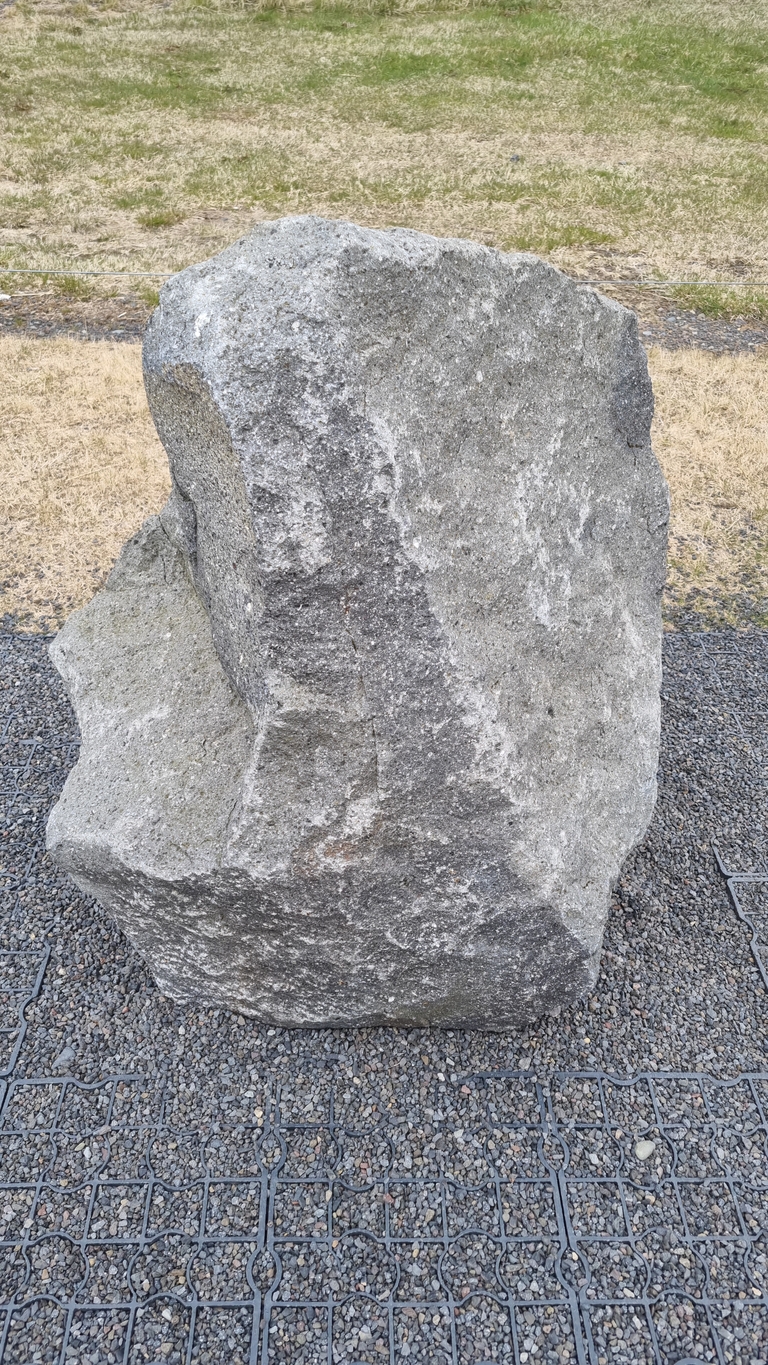
Ankaramite is a fine-grained igneous basaltic rock which is porphyritic, meaning that it has an abundance of phenocrysts (crystals) that are much larger than the grey groundmass of the rock and were formed in earlier crystallisation of the magma. The phenocrysts are plagioclase (feldspar, the white/silver crystals), pyroxene (the dark crystals) and olivine (the green and yellow crystals), where the pyroxene is normally found in highest number, although the abundance of each phenocryst can vary. Ankaramite is a rather uncommon rock in Iceland but is relatively common in Eyjafjöll mountains and has therefore been called the rock of the Eyjafjöll mountains, and that is why it is the first rock in the line. It is also one of the most beautiful rocks found in Iceland and one of the more recognizable. Ankaramite has been found as both lava layers and intrusions in Eyjafjöll and this sample was formed at 587±31 ka, during the upper Pleistocene, in a sill intrusion in Eyjafjöll. Ankaramite derives its name from Ankaramy in Madagascar, where it was first described in 1916. Today though, Ankaramite is classified as Picrite and not its own rock type.
Celebrating Earth Heritage
How to visit the Katla Geopark
Katla UNESCO Global Geopark is in central South Iceland