Eyjafjallajökull erupts
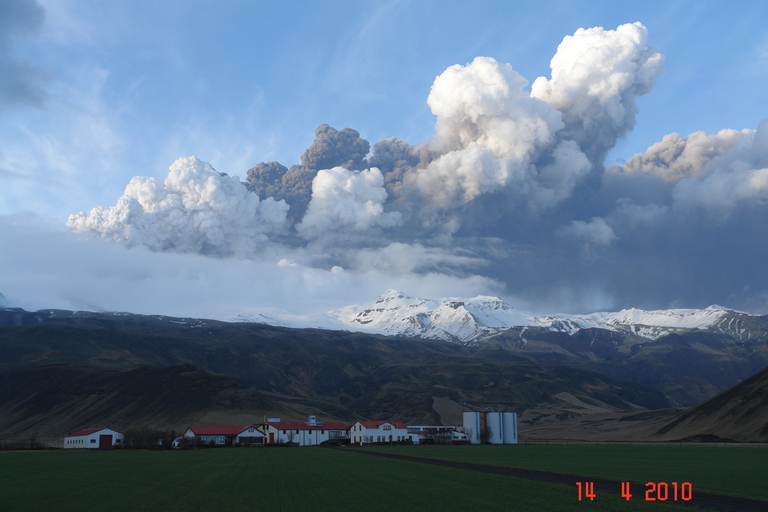
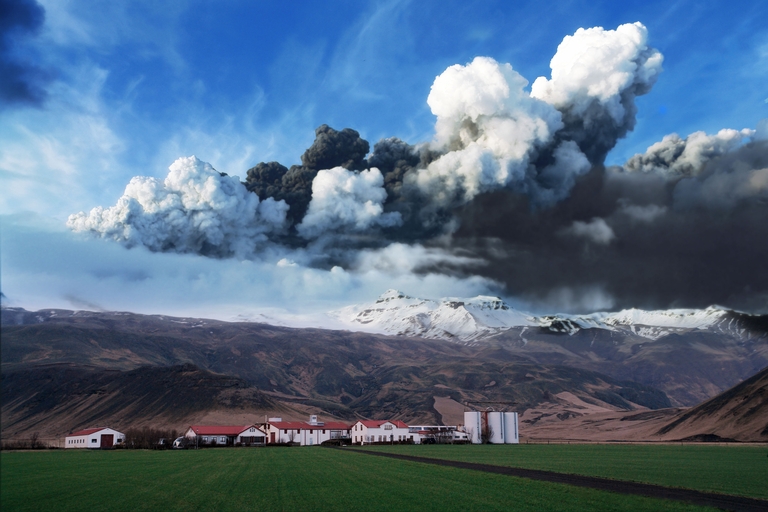
The eruption in Eyjafjallajökull itself began on April 14th, 2010, when fissures opened within the caldera. The eruption site was under the glacier, so a phreatomagmatic eruption began, which is an explosive eruption, which caused heavy tephra production and a high rising eruption plume. At the onset of the eruption, Eyjafjallajökull was covered by dense clouds and fog, but on the afternoon of the 14th, a small opening in the clouds showed the eruption column for the first time. The photo shown here was taken by Ólafur Eggertsson, farmer at Þorvaldseyri, on the afternoon of the 14th and is the first photograph taken of the eruption from the ground. The eruption would last from 14th of April until the 22nd of May, or for 39 days, and is divided into four phases depending on the type of activity the eruption had.
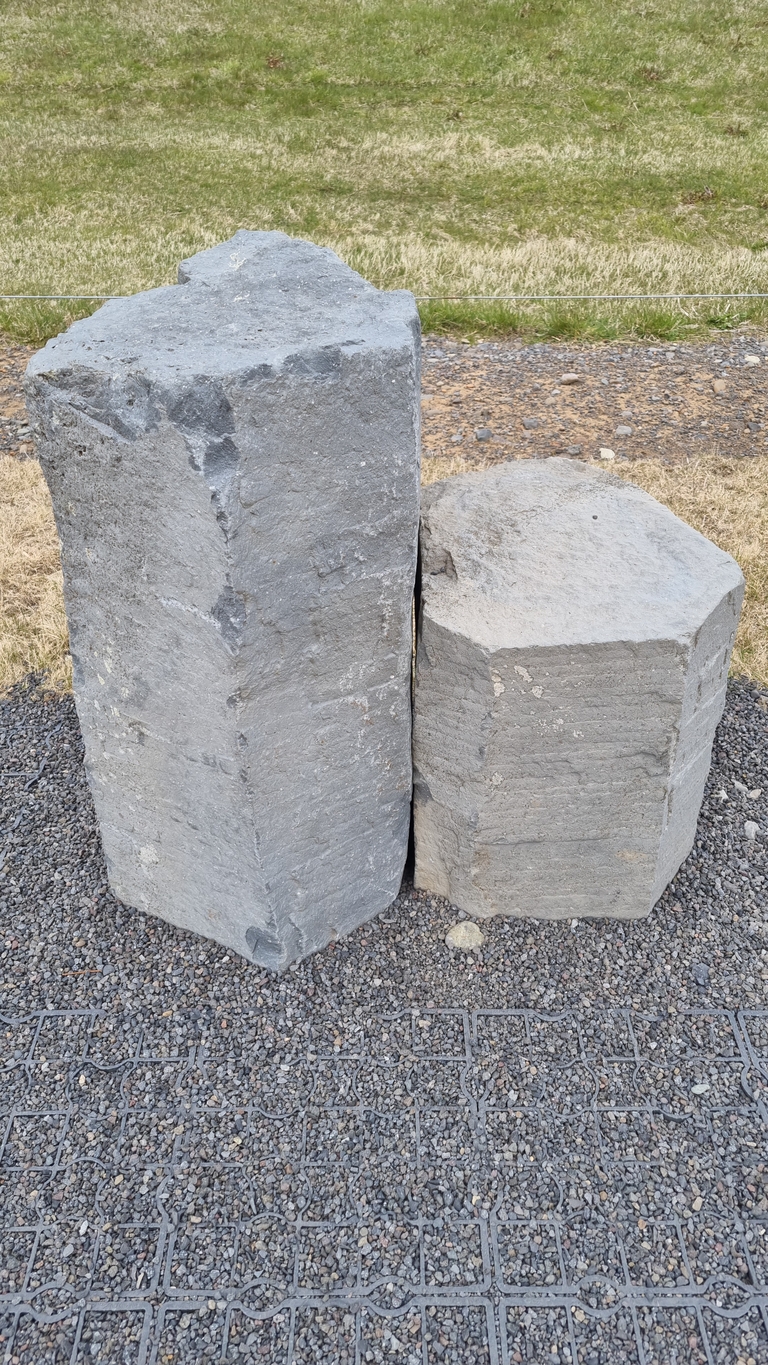
Columnar basalt forms when igneous rock cools down slowly, as the volume of it decreases as it cools and splits into columns. During the cooling, horizontal stress forms in the cooling rock, as the volume shrinks, and cracks begin to form which grow down through the rock as it cools and form the columns. The horizontal streaks that can be seen on the columns here are caused by the downward propagation of the crack through the rock. The columns are perpendicular to the cooling surface, i.e. they lie in the direction from which the cooling came. That means that the columns are vertical in lava flow (cooling from above and below), horizontal in intrusions (cooling from the sides), radiate from the center in pillow lavas (cooling from all directions) and can have many different directions in intrusions into tuff mountains (cooling from irregular surfaces). The columns are often hexagonal but can have anywhere from three to 12 angles. Columns are common in basalt, but much less common in more siliceous rocks.
Celebrating Earth Heritage
How to visit the Katla Geopark
Katla UNESCO Global Geopark is in central South Iceland