Phreatomagmatic eruption
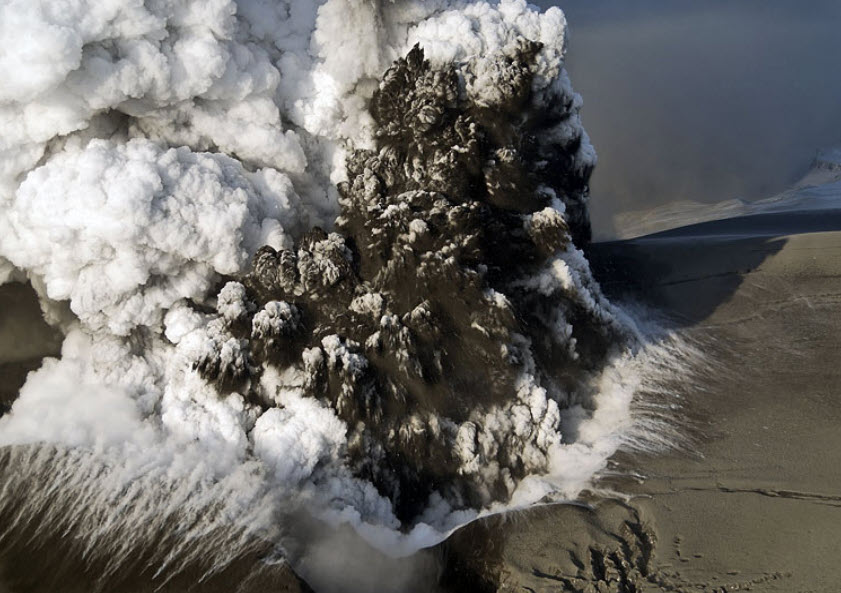
Before the actual eruption began, the volcano was hit by a series of earthquakes culminating in lava reaching the surface beneath the glacier at 01:15 in the night of 14th of April. A 1.8 km long fissure formed within the caldera of the volcano where the ice was about 150-200 m thick and another short-lived fissure just south of the caldera rim. The ice melt was rather slow to begin with, but at 05:55 the same night the eruption broke through the ice and a plume could be seen rising from the volcano.
During subglacial eruptions, lava and meltwater from the glacier interact and an explosive eruption occurs, called phreatomagmatic eruption. The interaction leads to the water boiling and turning into steam, which causes fragmentation of the magma as it expands and explodes at the eruption vent. The fragmentation of the magma creates tephra which is ejected from the vent in the explosions. The finest material, the ash, is largely carried up into the atmosphere with the eruption column, but the larger tephra fragments scatter around the vent and start to build up a crater. Large portion of the ash also settles on the ground in the vicinity of the eruption site, but parts of it can be transported long distances away. During subglacial eruptions, large glacial outburst floods called jökulhlaup can happen. These floods happen when the meltwater breaks through the glaciers and flows to the sea.
During the first day the intensity of the eruption increased, and the eruption plumed reached up to 10 km up into the atmosphere with heavy ash fall in the vicinity of Eyjafjallajökull, especially to the east and south of Eyjafjallajökull. On the 15th of April a new fissure opened within the caldera, slightly west of the previous one, and the main activity remained from that fissure during the eruption. The new fissure formed another opening in the glacier but on the 18th the power of the eruption started to dwindle and that marks the end of the first phase.
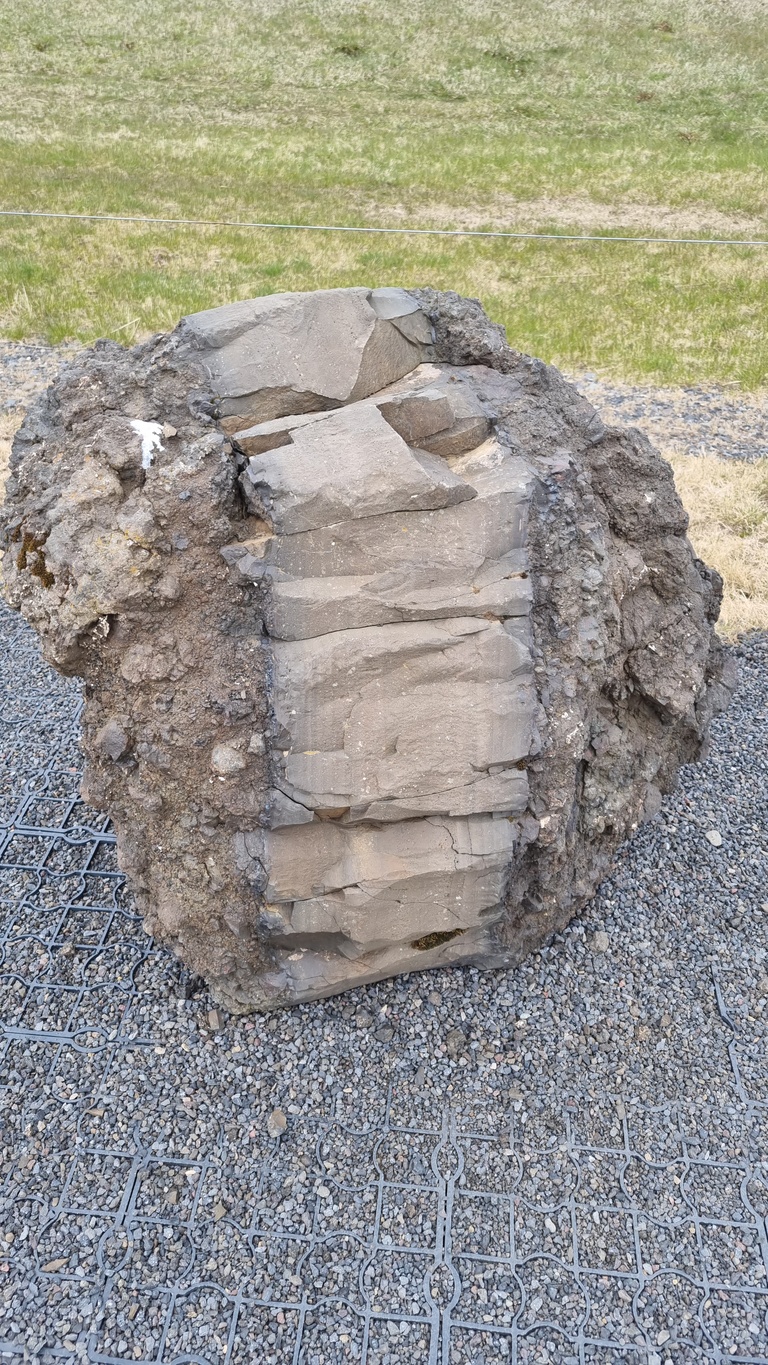
Intrusive rocks form when magma rises through the crust but does not reach the surface and cools down in the upper part of the crust. Intrusive rocks can also be the remains of an eruption channel, in which case the magma had reached the surface and caused an eruption, but the magma remains in the channel after the eruption where it cools down. Intrusive rocks are therefore always younger than the bedrock around them, and here the intrusive rock is surrounded by palagonite breccia. Intrusions can be both vertical, then called dikes, and horizontal, then called sills. Their thickness also varies greatly, from being thinner than 1 meter to dozens of meters thick. Intrusions can form both when magma pushes its way through a thick and stratigraphic rock stack, and in the same eruption that the country rock (the rock that the magma intrudes into) has formed, e.g. when there is an intrusion into a tuff mountain during the same eruptions in which the mountain was formed in. A glassy coating often forms on the contact surface of the magma with the bedrock, due to rapid cooling, and the glassy coating is clearly visible on the stone here as the black lines at the joints of the dike and the palagonite breccia.
Celebrating Earth Heritage
How to visit the Katla Geopark
Katla UNESCO Global Geopark is in central South Iceland