Vulcanian Eruption
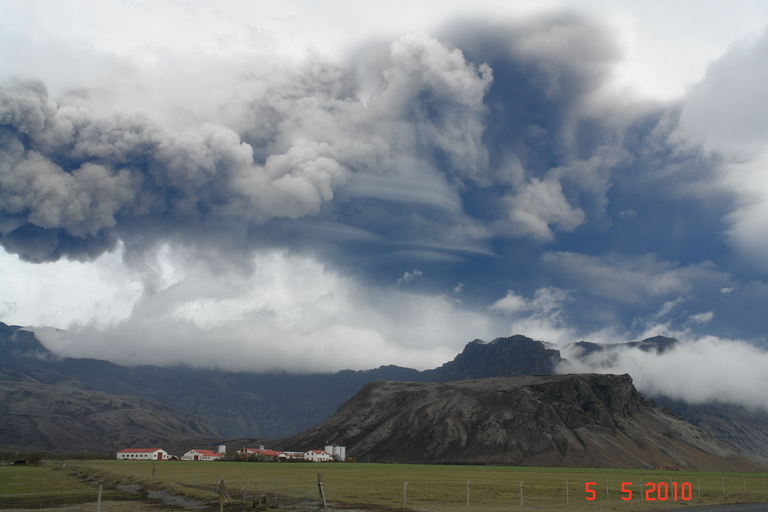
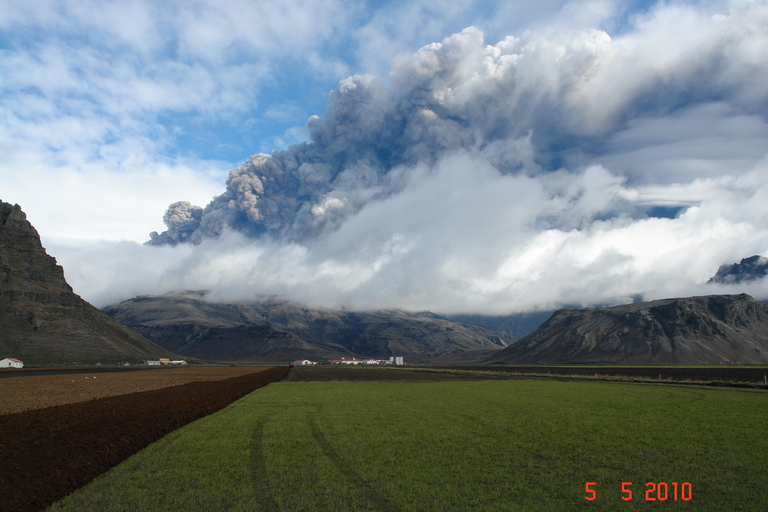
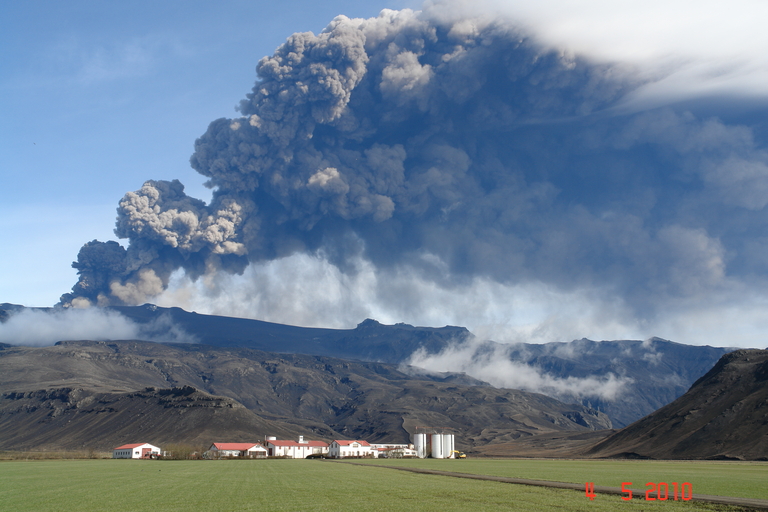
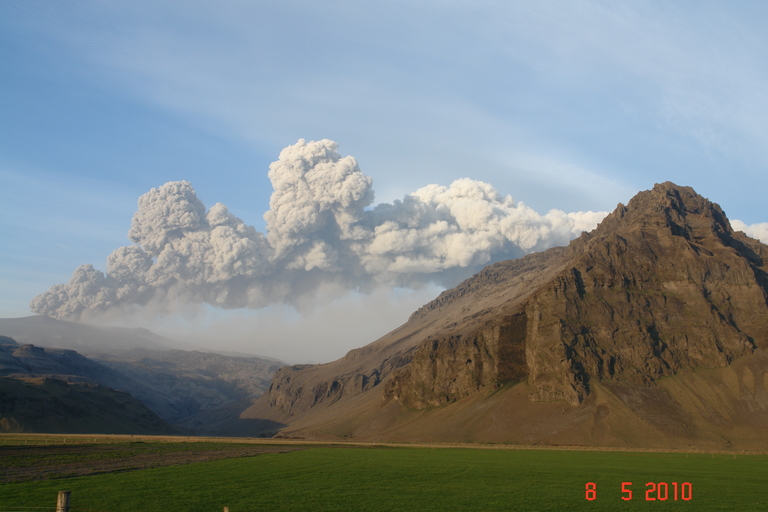
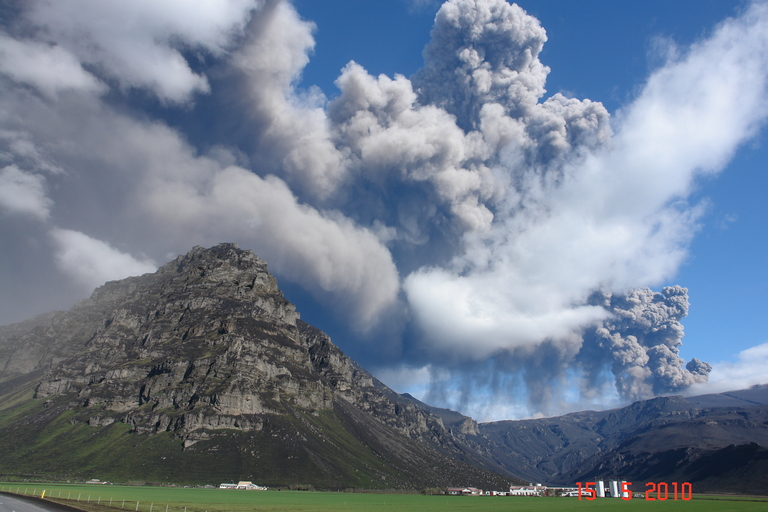
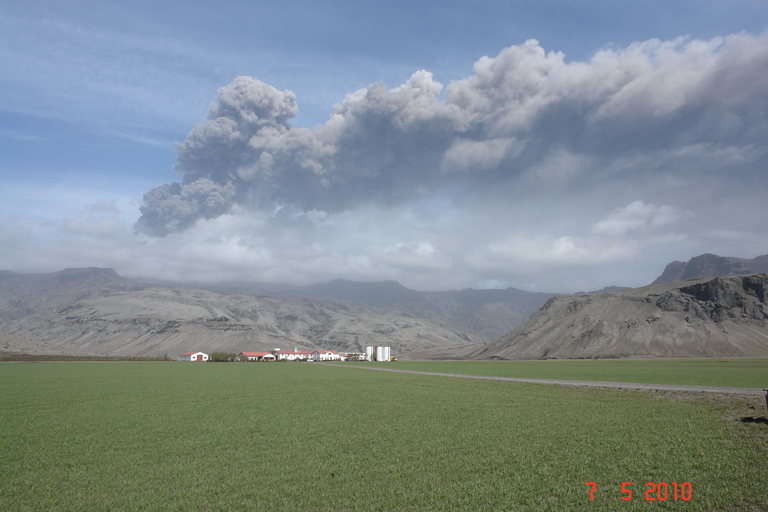
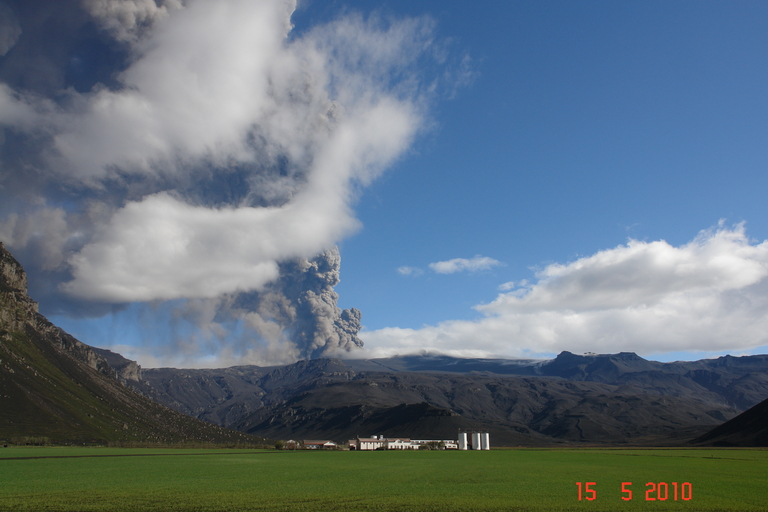
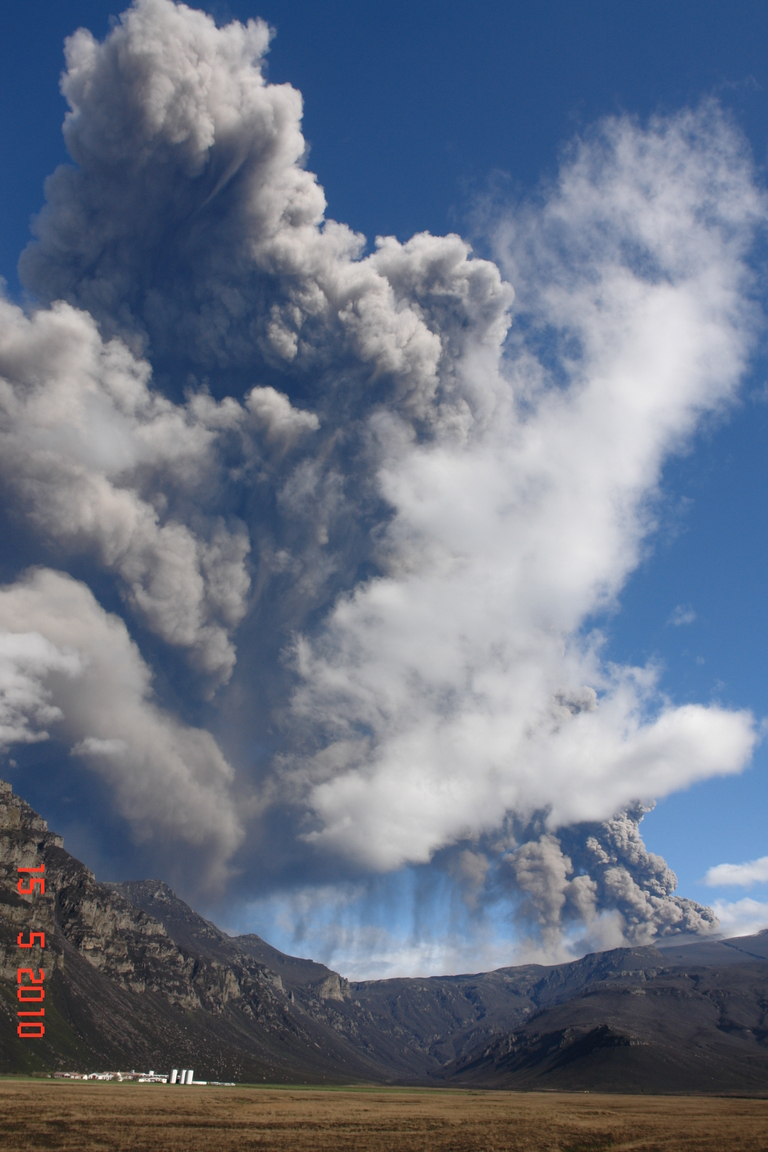
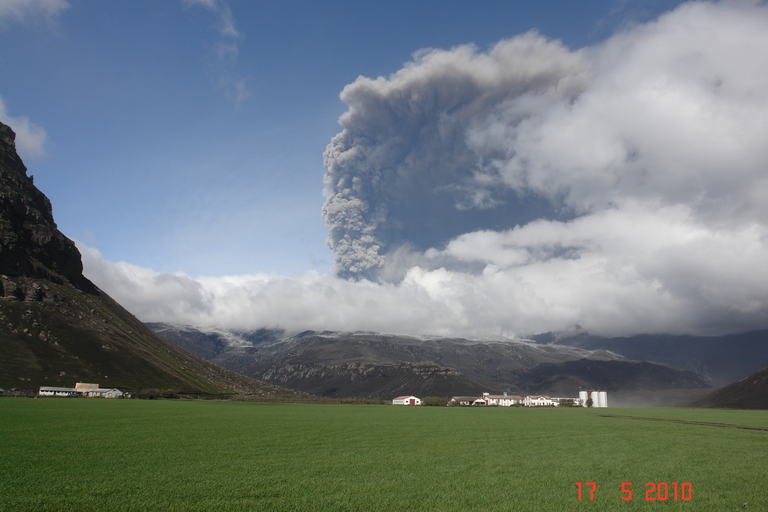
The third phase of the eruption in Eyjafjallajökull lasted from 5th to 17th of May and was characterized by increased eruption activity and ash production. New magma intrusions occurred during the phase that mixed with older silica-rich magma, changing the composition of the magma in the eruption, and the eruption went from being a Strombolian eruption to a Vulcanian eruption. Vulcanian eruptions are quite powerful explosive eruptions and the magma in such eruptions is usually intermediate. The upper part of the magma in the eruption channel can cool and form a plug, but below it the pressure builds up until the plug gives way. That results in an explosion that ejects tephra and gas away from the crater. The in-between time of explosions can be a few seconds and up to several hours. The eruption plume in this phase went up to a height of 9 km, but was usually at a height of 6-7 km, and high production of fine ash colored the plume gray. It is estimated that the tephra discharge rate in this phase was around 150-200 tons per second, with a peak discharge of about 400 tons per second. The power of the eruption was somewhat unstable during this phase, but the activity gradually began to decrease after 11th of May. After 18th of May, the activity began to decrease significantly and marks the beginning of the fourth and final phase of the eruption.
Tuff forms in volcanic eruptions where the lava cools down rapidly due to interaction with water, which fragments the lava into glassy tephra. The tephra, which is often fine grained and dark in colour (ash), settles and then starts to solidify and forms fine grained tuff.
The Móberg (Palagonite) formation of Iceland is mainly the volcanic material that was formed due to eruptions under glaciers or in the sea in the latter part of the Ice Age, 0.78-0.01 million years ago. The formation covers an area of about 11,200 km2 and can be found on all current active volcanic belts in the country. The formation consists not only of palagonite, as the basic units of the formation are also pillow lavas, intrusions, and lava flows. Hyaloclastite ridges and tuyas are common in the formation and many examples of them can be seen within Katla Geopark. There, the different strata of the Móberg formation can often be seen, such as cube jointed basalt, basalt columns, palagonite and palagonite breccia. The different strata can all form in the same eruption, but under different conditions during the eruption itself.
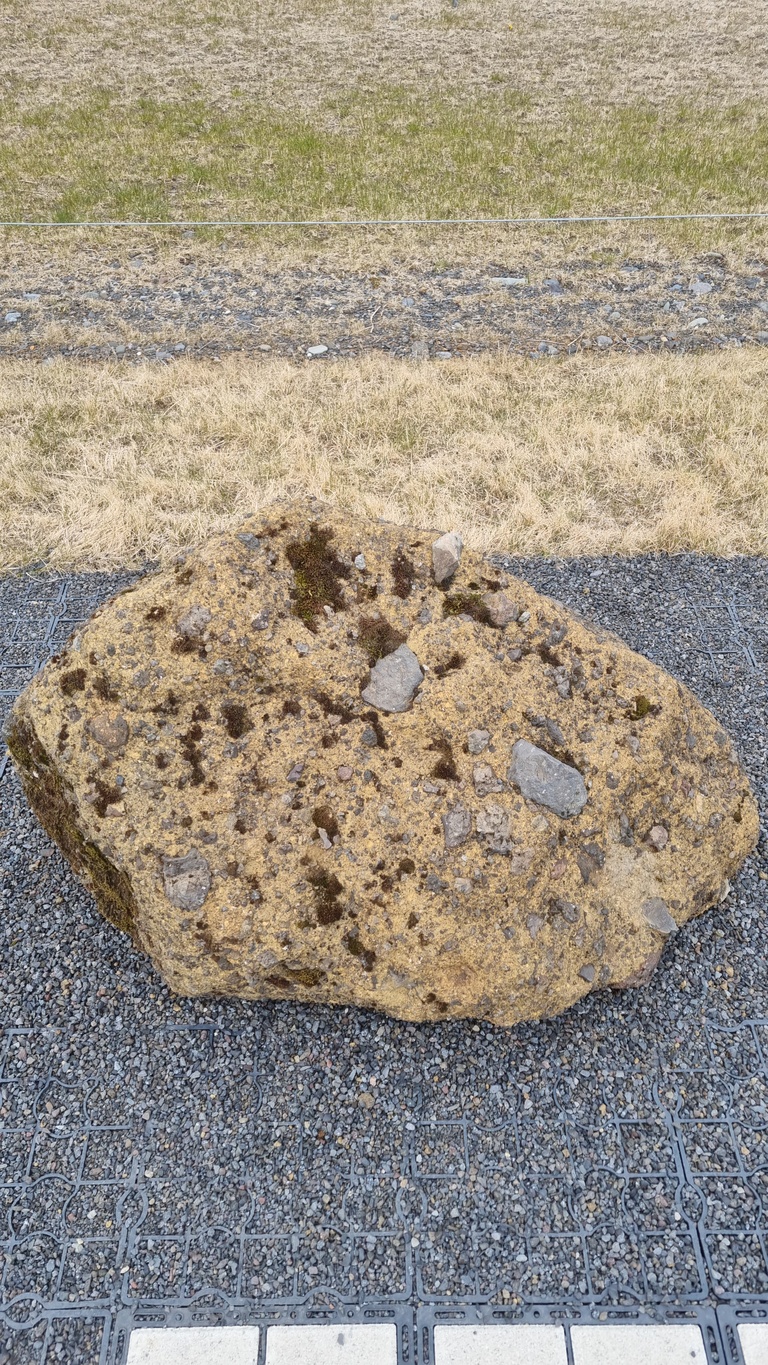
Palagonite is formed when magma cools rapidly during an eruption under a glacier or in the sea, but then the magma fragments and forms volcanic ash instead of lava. The ash then settles around the eruption vent and is then called volcanic tuff. The tuff soon undergoes chemical alteration so that it glues together to form rock, which is then called palagonite. The Palagonite breccia is formed under the same conditions, but when the fragmenting of the magma is not as forceful so that pieces of lava settle in the ash. Cube jointed basalt is formed by the rapid cooling of lava, lava that is either intruded into the tuff deposits or in a lava flow once water can no longer reach the eruption vent. The basalt columns are formed under the same conditions but with slower cooling than when cube jointed basalt is formed, but basalt columns can often be seen either below or on top of a layer of cube jointed basalt.
Celebrating Earth Heritage
How to visit the Katla Geopark
Katla UNESCO Global Geopark is in central South Iceland