The last measured activity
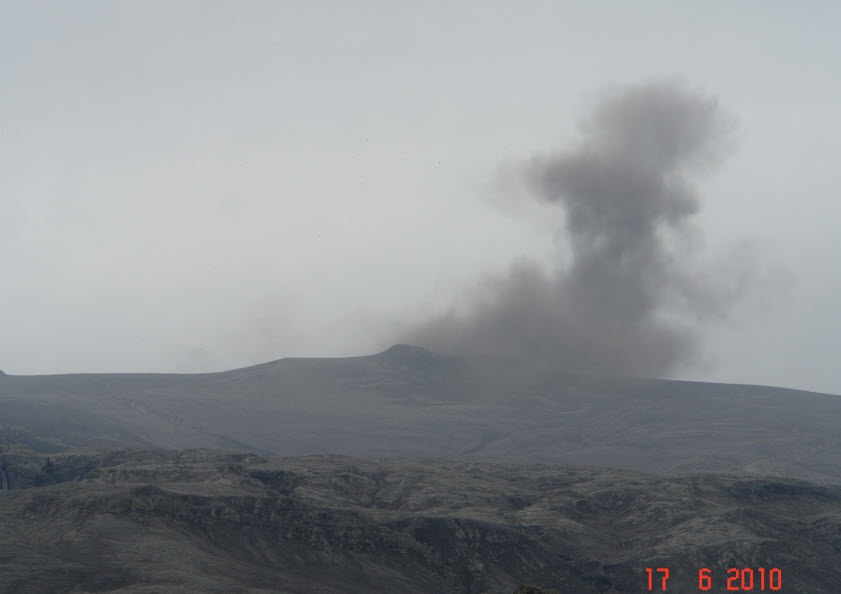
Minor activity resumed between the 4th and 8th of June and again on the 17th of June when a few explosions occurred from the crater. These explosions were mostly caused by build-up of steam, but a small amount of magma may have reached the surface as well causing minor explosive activity and ash production. Minor amount of ash was produced by these explosions and an ash-filled steam column rose from the eruption site, but the distribution of that ash was limited to the glacier itself. The 17th of June therefore marks the end of the eruption activity in Eyjafjallajökull and is quite fitting as that is the Independence Day of Iceland. The photo was taken by Ólafur Eggertsson, a farmer at Þorvaldseyri, at 14:36 on 17th of June. The image shows a small ash cloud that either formed during the last explosion in the crater, or is ash blown into the air by a steam explosion in the crater. The next picture is taken two hours later, when the ash has fallen to the ground and no more sign of activity in the crater.
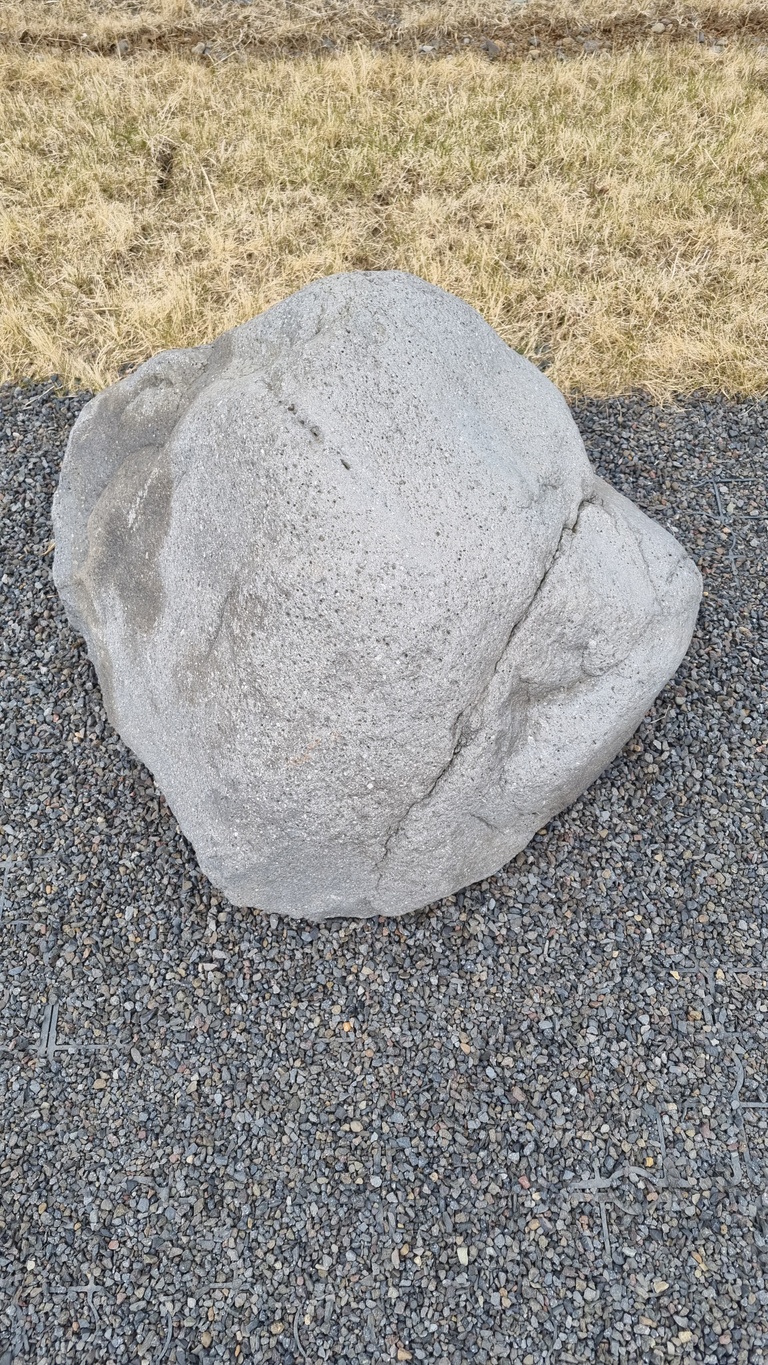
Porphyritic basalt contains white or silvery feldspar crystals. The feldspar crystals grew in a magma chamber before being carried to the surface by magma. As magma slowly starts to cool down deep in the earth crust, crystals start to form in it and grow with time. If the magma then intrudes closer to the surface or erupts, the remainder of the magma cools down relatively quickly, creating a very fine matrix but with the already formed crystals in it. The groundmass of the rock here is “normal” basalt, gray and fine-grained, but the phenocrysts are much larger feldspar (plagioclase) crystals and easily distinguished with the eye.
Celebrating Earth Heritage
How to visit the Katla Geopark
Katla UNESCO Global Geopark is in central South Iceland