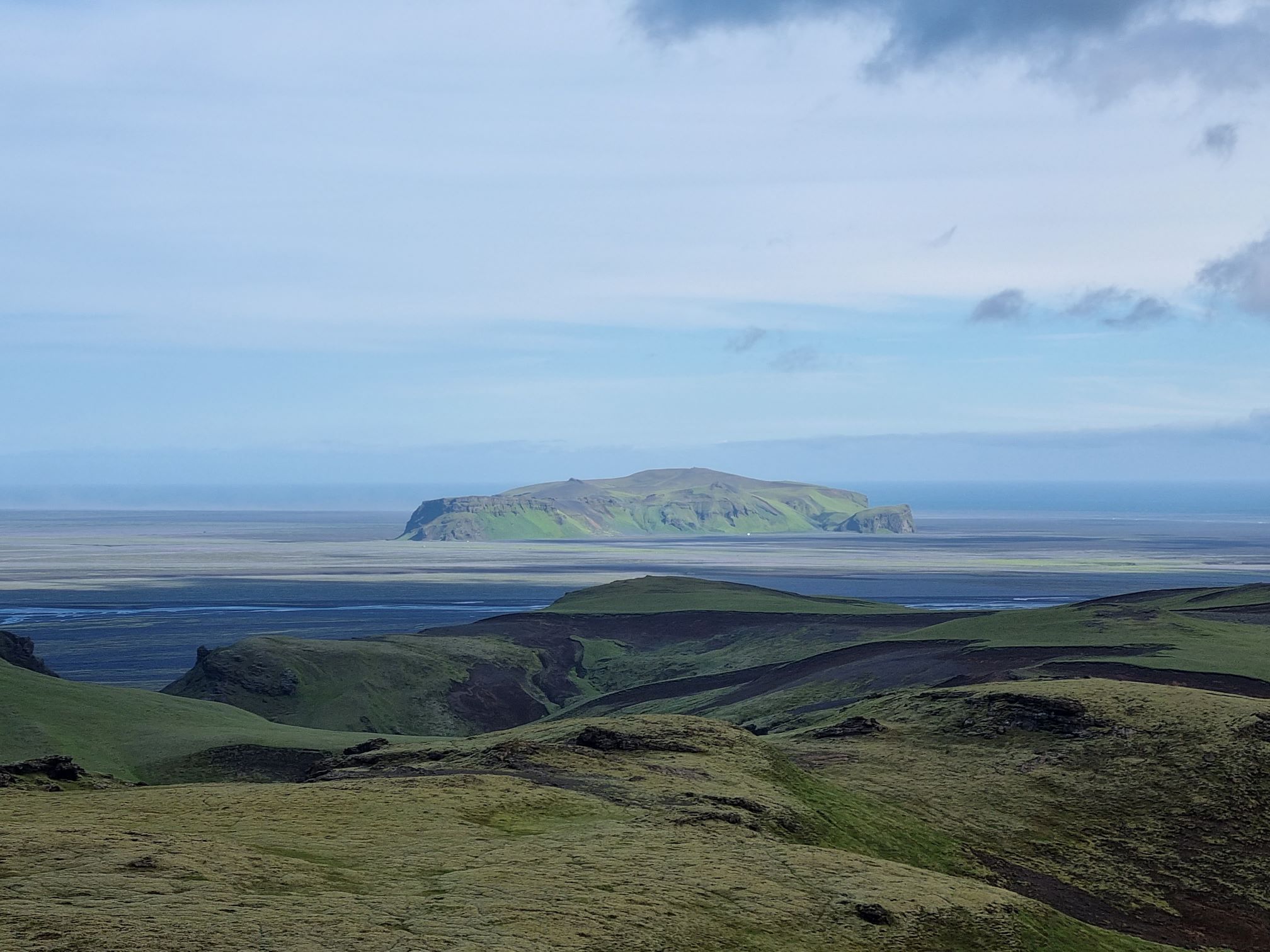
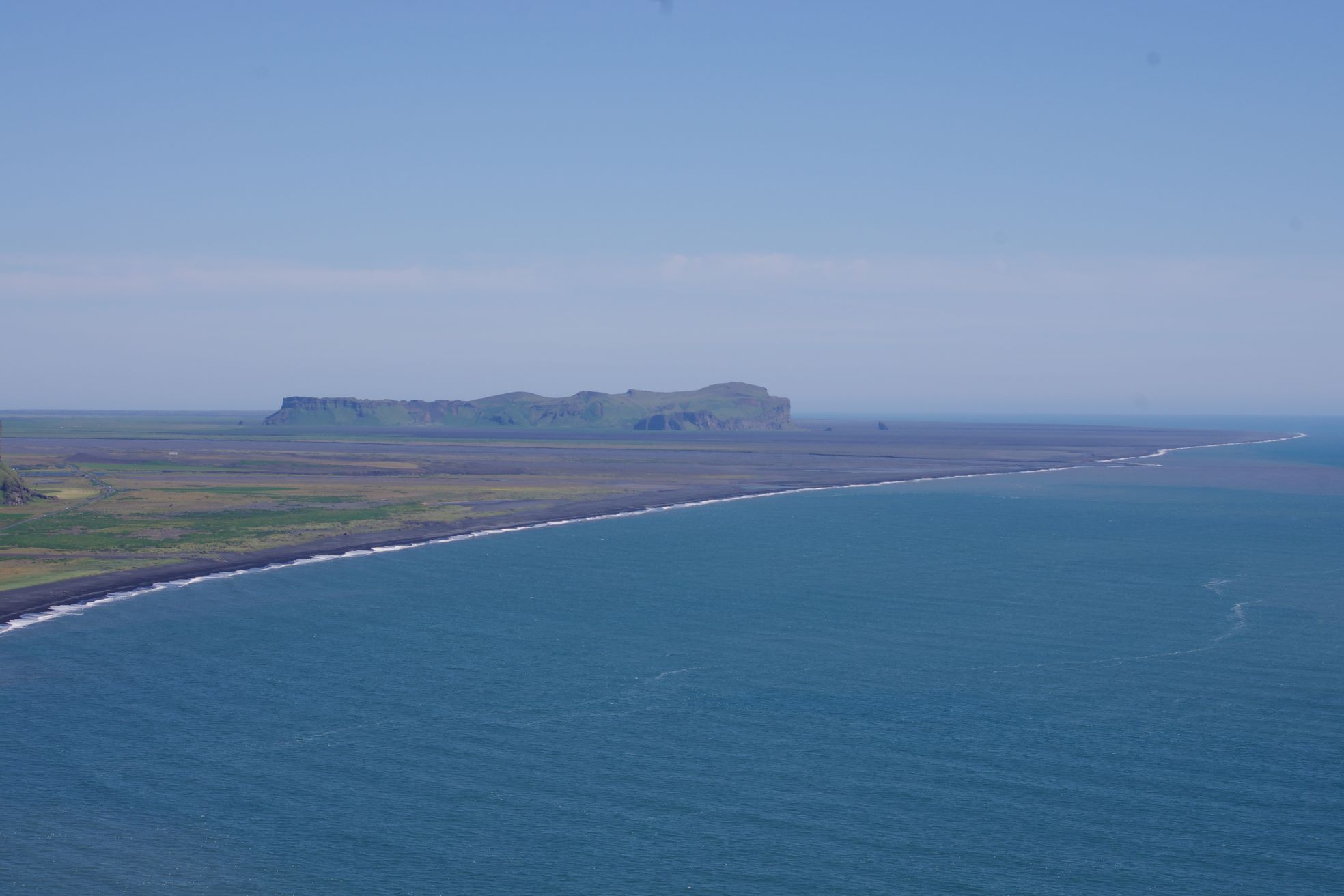
221 meter high tuya on the southern part of the Mýrdalssandur sand plain
Hjörleifshöfði
Mt. Hjörleifshöfði is one of the more beautiful tuyas within the Geopark. Tuyas are formed in subglacial and/or submarine eruptions, but the age of the tuya is not known but likely that it was formed during the last or the second to last interglacial periods. When the Ice age glaciers started to retreat, the tuya was surrounded by the ocean and numerous erosional landforms from waves can be seen there.
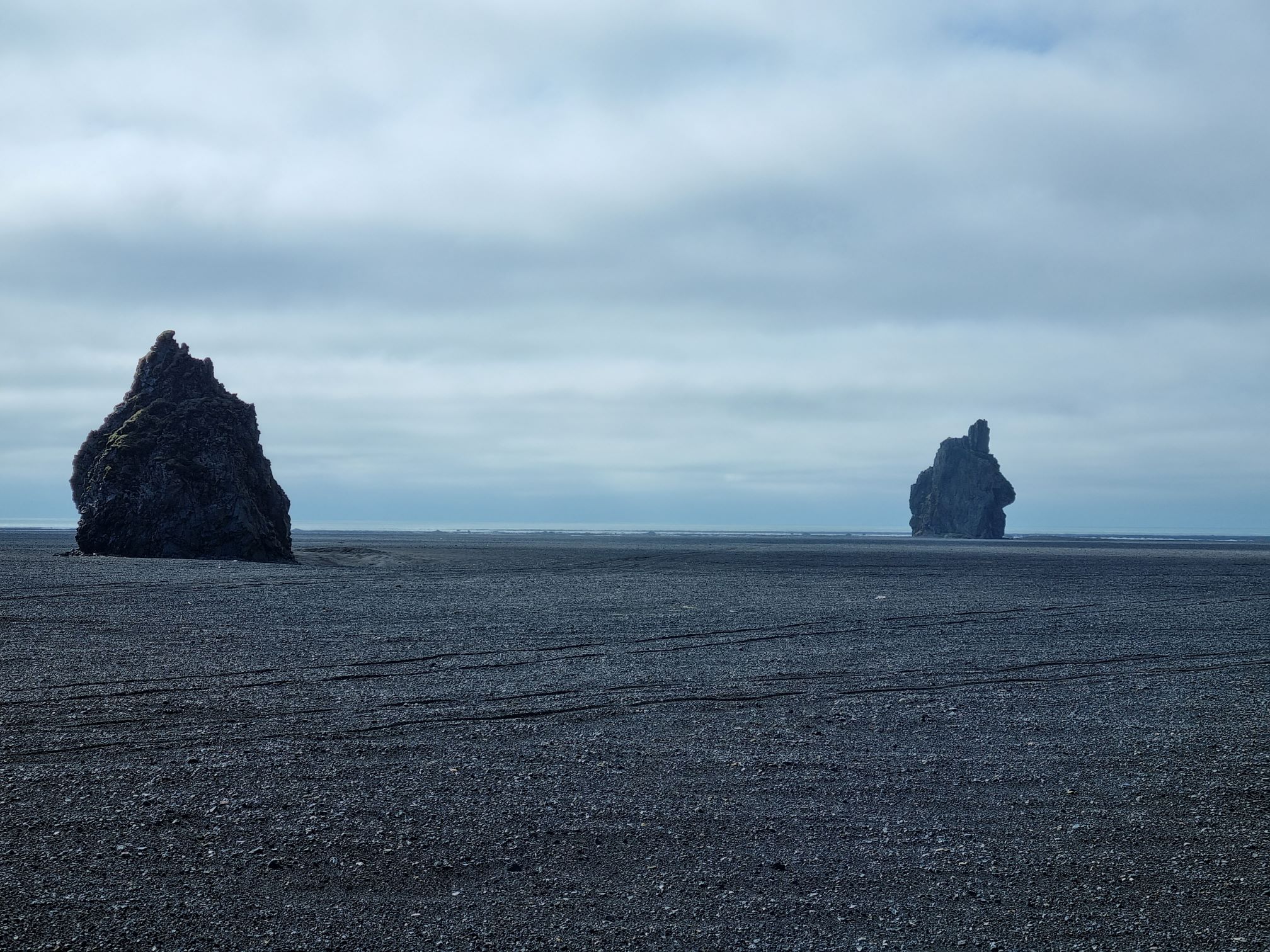
The most notable are the steep old sea cliffs, especially on the south side, and you can also find several sea stacks around the tuya. There are also numerous sea caves on the slopes of the tuya, where the best known of them is Gígjugjá on the south side. The deposition from numerous glacial outburst flows (jökulhlaup) due to eruptions in Katla and numerous glacial rivers in the area have now led Hjörleifshöfði to being surrounded by black sand instead of the sea. The last jökulhlaup in the area was in 1918, and then the tip south of Hjörleifshöfður was created. That tip is called Kötlutangi and is still, despite being heavily eroded over the last few decades, the southernmost point of the country.
The cave Gýgjagjá is on the southern part of Mt. Hjörleifshöfði. The cave was originally a sea cave, but the coastline at Hjörleifshöfði has moved far to south in the last few millennia due to glacial outburst floods due to eruptions in Katla volcano. The coastline was e.g. at the southern side of Hjörleifshöfði at the end of the 9th century when Hjörleifur (one of Iceland’s first settler) settled there. Today, the cave is often called "the Yoda's cave", but the shape of the cave's mouth is undeniably somewhat reminiscent of Yoda's outline from Star Wars.
The cave is dug into a fine-grained palagonite tuff, but there are several pillows and other rock fragments within the matrix, and e.g. one pillow with beautiful radial jointing is on the right-hand side of the cave mouth. In earlier times, wood was often stored in the cave, and for a long time there was also a shelter for shipwrecked people not far from the cave. Another smaller cave is to the west of Gýgjagjá, called Fjárból, which is also worth checking out.

Celebrating Earth Heritage
How to visit the Katla Geopark
Katla UNESCO Global Geopark is in central South Iceland