DC-3 Plane Wreck & Outwash Plain
Sólheimasandur
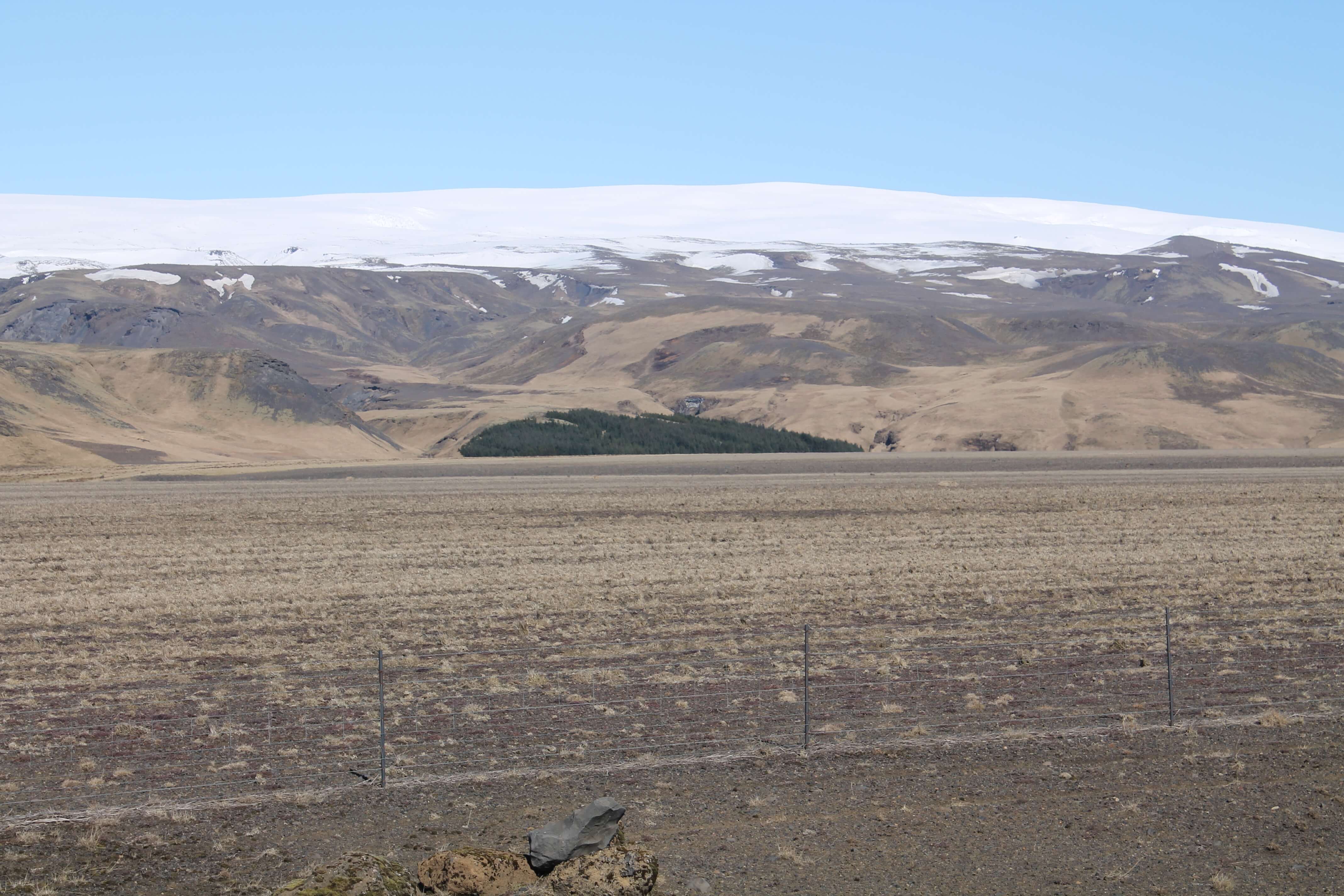
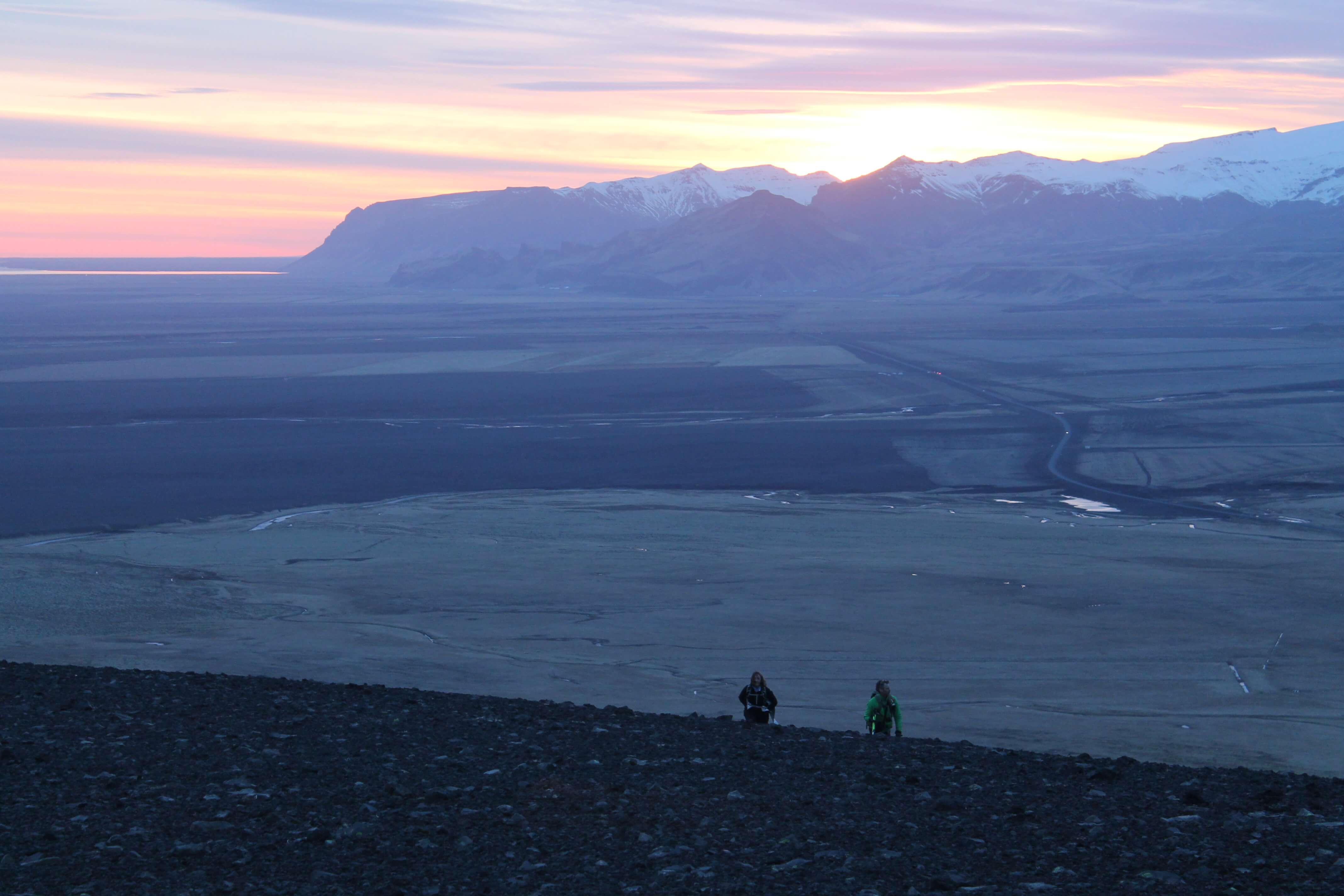
Sólheimasandur is an outwash plain just south of Mýrdalsjökull. Sólheimasandur has an area of about 50 km2 and, together with Skógasandur, has been forming for at least the last 4500 years. The plain has been built up by sediments from repeated glacial outburst floods from Katla volcano and the several glacial rivers in the area. At least eight glacial outburst floods have gone over the area in the last few millennia, the last one in 1999 when a small flood came from Sólheimajökull due to minor volcanic eruption in Katla.
However, from around 1840, but possibly earlier, and until 1936, many floods came from the Sólheimajökull glacier. These flows were not formed due to geothermal areas or volcanic eruptions in Katla, but due to an ice dam that formed and blocked the outlet in Jökulsárgil canyon. This created a lagoon next to the glacier, which then broke through the ice dam when the pressure was high enough.
These floods occurred annually, sometimes more often, but stopped when the glacier had retreated to a point where it no longer could block the canyon. Jökulsá river flows from Sólheimajökull glacier and separates Sólheimasandur and Skógasandur outwash plains and has eroded about 20 meters down into the sand in the last 400-500 years. The river is often called Fúlilækur, the Smelly River, but its foulness is due to hydrogen sulphides (H2S) in the water, which comes from one of the geothermal areas of Katla under Mýrdalsjökull glacier.
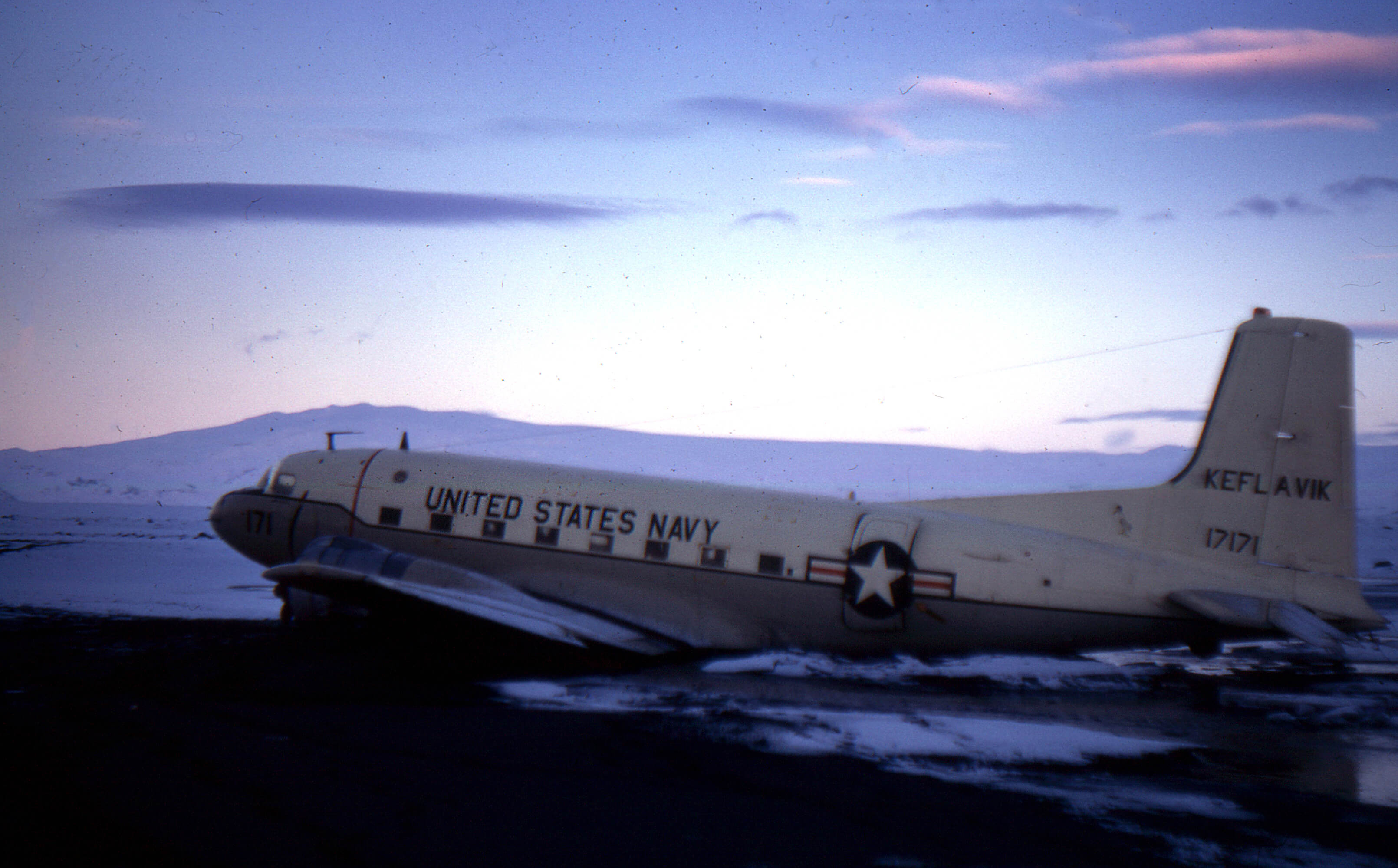
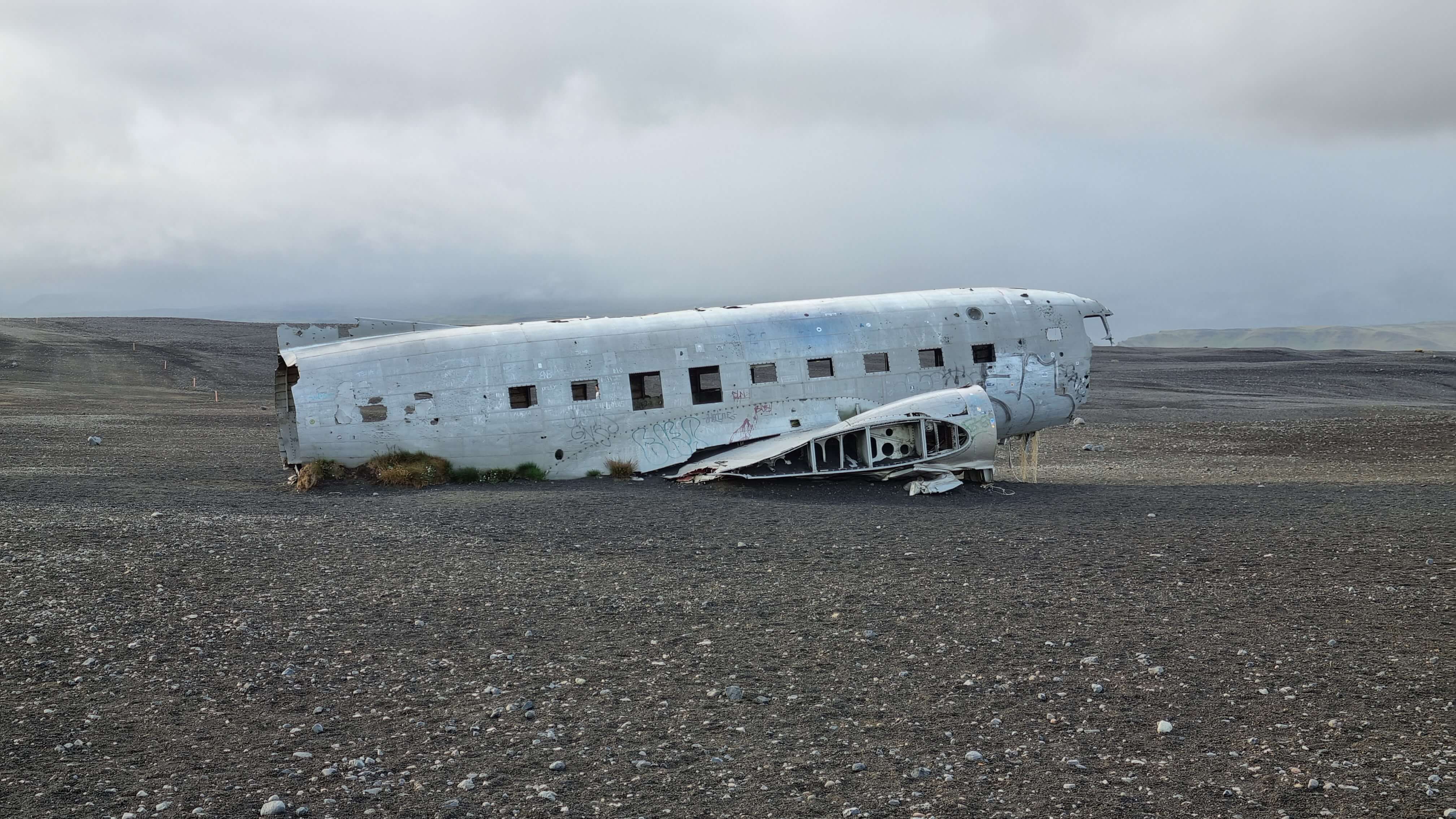
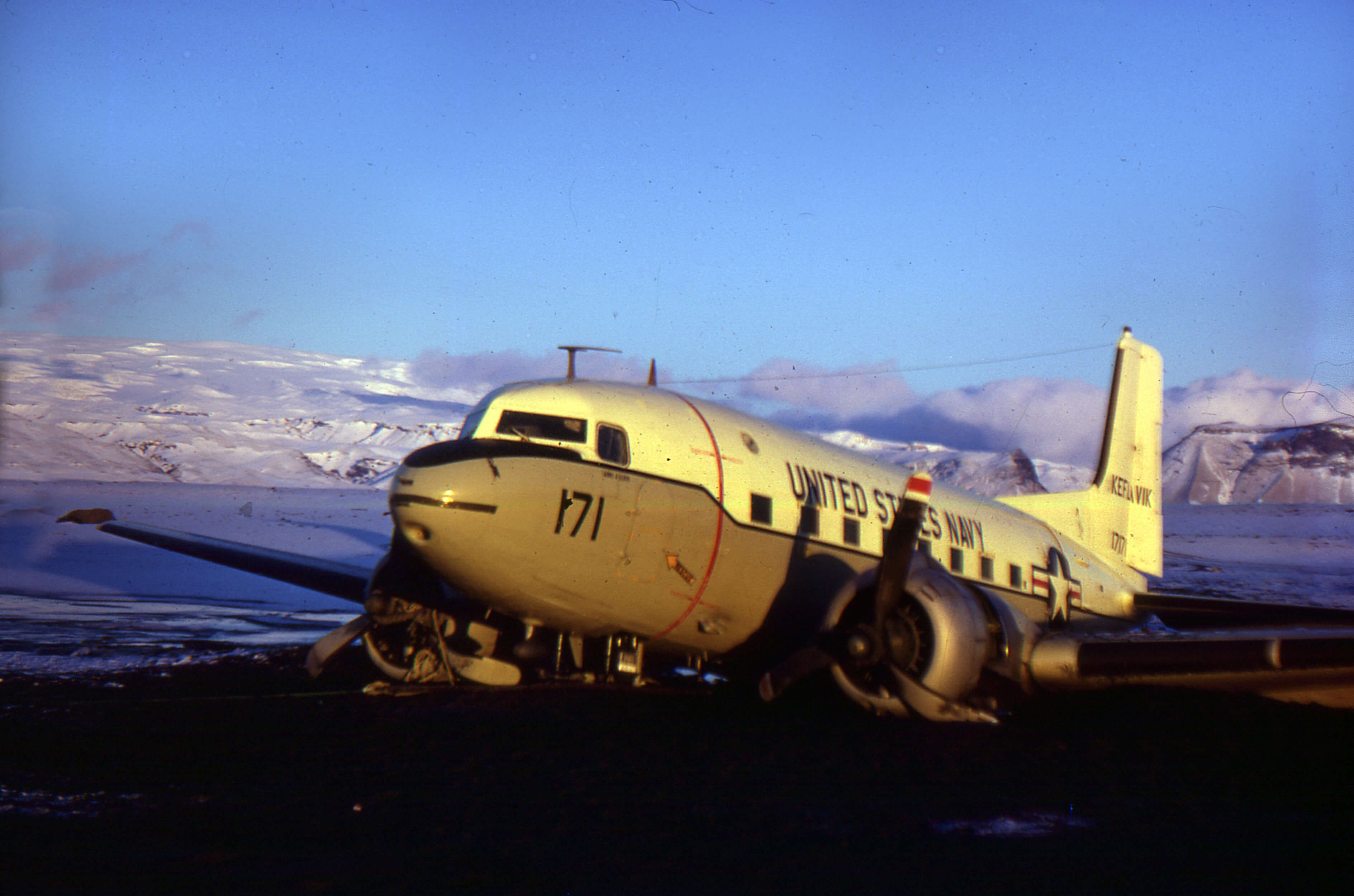
Today the sand plain is most known for the wreck of a Douglas C-117 from the US Navy, which crashed on the sand plain around two o'clock on November 21st, 1973. The plane was on its way from Höfn in Hornafjörður when icing caused both plane’s engines to shut down. The crew did not manage to restart the engines, and the visibility was very low due to fog, but the crew managed to make an emergency landing on the beach at Sólheimasandur and the plane came to a stop a few meters from sea level.
The crew members escaped unhurt from the emergency landing and a helicopter from the US Navy quickly arrived at the plane, together with farmers in the vicinity and members of the Víkverji ICE-SAR team from Vik. Three MPs were left behind by the Navy to guard the plane along with several members of the ICE-SAR unit. Among them was Þórir N. Kjartansson, who took the photos shown here and the geopark would like to thank him very much for sharing the photos with us. Later that day during high tide, waves started to reach the plane. It was then decided to drag the plane higher up to the beach and later it was pulled even higher up to Sólheimasandur and the plane has been there ever since.
A few days after the emergency landing, the US military took everything valuable from the plane but gave the aviation fuel that was on the plane to the ICE-SAR unit, and they used it on their snowmobiles. Later, the US Army invited the members of the ICE-SAR unit who were involved in the accident to visit the military base at Keflavík, and the unit was given the coat of arms of the US Marine Corps.
A very good article was written about this incident by Eliot Stein and we recommend reading it for more information: https://www.vice.com/en/article/mg777n/icelands-ghost-fleet
Celebrating Earth Heritage
How to visit the Katla Geopark
Katla UNESCO Global Geopark is in central South Iceland