Best Waterfalls to Visit in Katla UNESCO Global Geopark
Few natural attractions capture the magic of Iceland quite like its waterfalls! Whether cascading over towering cliffs, disappearing into narrow volcanic canyons, or tumbling down ancient rock formations... Waterfalls are among the country's most spectacular natural wonders. And if you are exploring South Iceland, you are in for a treat!
Within Katla UNESCO Global Geopark, waterfalls are an essential part of the landscape. Fed by glaciers, springs, rivers, rainfall, and groundwater, they reveal the powerful geological forces that have shaped this region over thousands of years. Some are famous landmarks visited by travelers from around the world, while others remain quieter treasures waiting to be discovered too! But from the dramatic 60-metre cascade of Skógafoss to the hidden beauty of Gljúfrabúi, here are seven incredible waterfalls to add to your South Iceland self-drive itinerary!
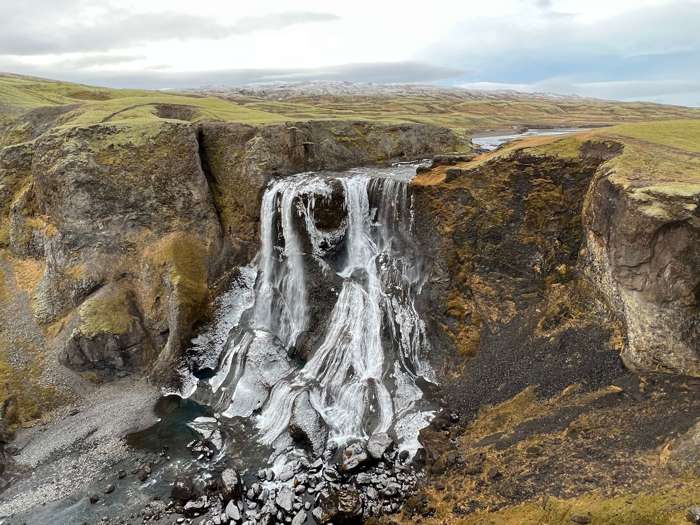
1. Skógafoss: One of Iceland's Most Spectacular Waterfalls
Few waterfalls are as instantly recognizable as Skógafoss. Located near the village of Skógar, Skógafoss is approximately 62 meters high and 25 meters wide. The Skógá River plunges over a dramatic cliff, creating an enormous curtain of water and a permanent cloud of mist at its base.
On sunny days, the combination of sunlight and water spray frequently creates beautiful rainbows, making this one of Iceland's favorite photography locations. Visitors can walk almost directly to the base of the waterfall, where the sheer force of the falling water can be felt from just a short distance away. For a different perspective, a staircase beside the falls leads to an observation platform above, offering sweeping views of the surrounding landscape.
Furthermore, Skógafoss is part of an ancient coastal landscape. The cliffs along this stretch of South Iceland mark an old sea-cliff line formed when relative sea levels were higher toward the end of the last glacial period. As glaciers retreated and sea levels changed, the coastline shifted, leaving behind the dramatic cliffs over which rivers now flow.
This is a perfect example of how glaciers, changing sea levels, and erosion have worked together to shape Iceland's landscape. Visitor Tip: Bring waterproof clothing if you plan to approach the base of the waterfall. The spray can be intense, particularly when the river is flowing strongly too!

2. Kvernufoss: A Hidden Gem Near Skógafoss
Just a short distance from Skógafoss lies another beautiful waterfall that many travelers overlook: Kvernufoss. Hidden inside a narrow, moss-covered canyon, Kvernufoss offers a completely different experience from its famous neighbor.
The waterfall drops ~30 meters into a secluded gorge surrounded by lush vegetation and steep rock walls. A walking trail leads visitors from the Skógar Museum area along the river to the waterfall. Additionally, one of the most special features of Kvernufoss is that, under suitable conditions, visitors can walk behind the waterfall. From this sheltered viewpoint, the cascading water creates a beautiful natural curtain across the entrance to the gorge.
Next, the cliffs and canyon walls surrounding Kvernufoss reveal the complex volcanic history of South Iceland believe it or not! The region contains layers of volcanic materials deposited through repeated eruptions, glacial activity, and other geological processes. Meanwhile, over time, flowing water has gradually carved channels through these formations, creating the sheltered canyon visible today.
Visitor Tip: Allow approximately 30–60 minutes for the visit, including the walk to and from the waterfall. Waterproof ankle supporting footwear is recommended, particularly if you plan to approach the area behind the falls.

3. Seljalandsfoss: Walk Behind a Waterfall
If there is one waterfall in South Iceland that offers a truly unique experience, it is Seljalandsfoss. Located just off Route 1, Seljalandsfoss is approximately 60 meters high and is famous for the walking path that passes behind its cascading water.
However, unlike most waterfalls, where visitors admire the view from the front, Seljalandsfoss allows you to step inside the natural hollow behind the falling water and look outward through the curtain of water. The experience is particularly beautiful during the summer months, when the surrounding vegetation is green and the long daylight hours provide excellent opportunities for photography.
The waterfall is fed by the Seljalandsá River, which originates in the glacial environment beneath Eyjafjallajökull. Further, the waterfall flows over an ancient coastal cliff formed during Iceland's changing relationship with the sea and glaciers. For example, as the landscape evolved, rivers began flowing over these former coastal cliffs, creating the waterfalls that visitors see today. The surrounding area also tells an important story about Iceland's volcanic past, particularly the geological influence of Eyjafjallajökull.
Visitor Tips:
1- The path behind the waterfall can be slippery, and visitors should expect to get wet. During winter, ice and falling icicles can make the route dangerous, and the path may be closed. Always respect safety barriers and closures.
2- The waterfall is lit up as soon as the sun goes down... So leave this for a first or last stop if you're pressed for time during winter travels.
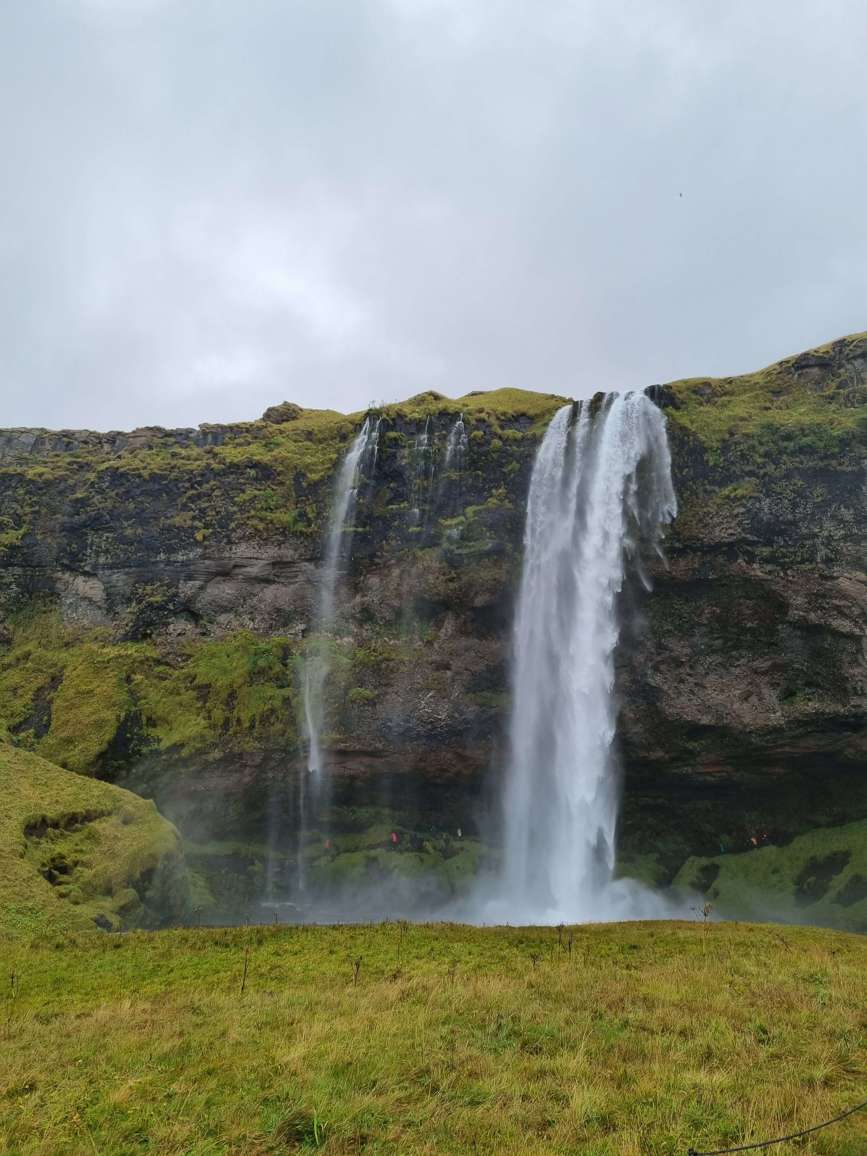
4. Gljúfrabúi: The Waterfall Hidden Inside a Canyon
Just a short walk from Seljalandsfoss is one of the most unique waterfalls in Katla Geopark: Gljúfrabúi. In fact, its name translates roughly to Canyon Dweller, which is an appropriate description for a waterfall that is almost completely hidden from view.
Approximately 40 meters high, Gljúfrabúi goes into a narrow canyon surrounded by towering rock walls. A large boulder partially blocks the entrance, concealing much of the waterfall from people walking along the nearby road. To experience the falls, visitors must carefully make their way into the canyon, following the shallow stream between the rocks. Once inside, the atmosphere is extraordinary. Water cascades from high above into the enclosed chamber, while sunlight filters through the narrow opening overhead. To illustrate, the result is a magical natural setting that feels worlds away from the busy South Coast attractions nearby.
First, Gljúfrabúi is particularly interesting because of the geological formations surrounding it... Second, the waterfall flows over the edge of a volcanic landscape associated with ancient lava fields formed during the early Holocene. Third, the surrounding rock includes palagonite formations, created through interactions between volcanic material and water.
Over time, flowing water has carved and shaped the canyon, creating the narrow passage and enclosed area that make this waterfall so distinctive. There are also fascinating local stories associated with the area. According to Icelandic folklore, the large boulder near the waterfall was once associated with hidden people, or huldufólk.
Visitor Tip: Entering the canyon requires walking through water, so waterproof boots are highly recommended. But be aware of slippery rocks and the risk of falling stones. Gljúfrabúi is a protected natural monument, so please treat the area with care.
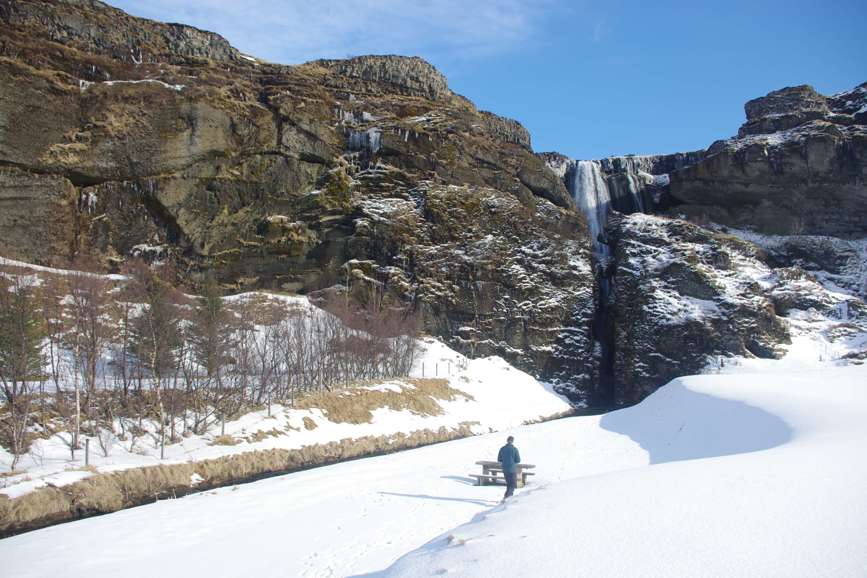
5. Gluggafoss: The Window Waterfall
For travelers interested in geology, Gluggafoss, (also known as Merkjárfoss), is one of the most exciting waterfalls in the region! Its name literally translates to Window Falls. Likely referring to the unusual openings and tunnels carved into the rock through which the Merkjá River flows.
Unlike a traditional waterfall that simply plunges over a cliff... Gluggafoss actually follows a series of natural channels within the rock before emerging through several openings. The result is a stunning display of how water can gradually reshape even solid volcanic formations.
Gluggafoss provides an excellent opportunity to observe the differences between two types of volcanic rock. For example, the upper section of the waterfall flows through relatively soft palagonite, or volcanic tuff, while the lower section includes harder basalt. Over thousands of years, erosion has carved tunnels and grooves through the softer rock, creating the distinctive window-like openings that give the waterfall its name.
The waterfall has also changed throughout recent history. During the 1947 eruption of Hekla, volcanic ash was carried downstream and deposited within parts of the waterfall's channels. This altered its appearance, and it took decades for erosion to gradually restore much of its former character. Pretty wild, huh?
It is a true reminder that Iceland's geological landscape is constantly evolving. Visitor Tip: Gluggafoss is an excellent stop for anyone interested in photography and geology. Take time to observe the different openings in the rock and how the water changes direction as it descends...
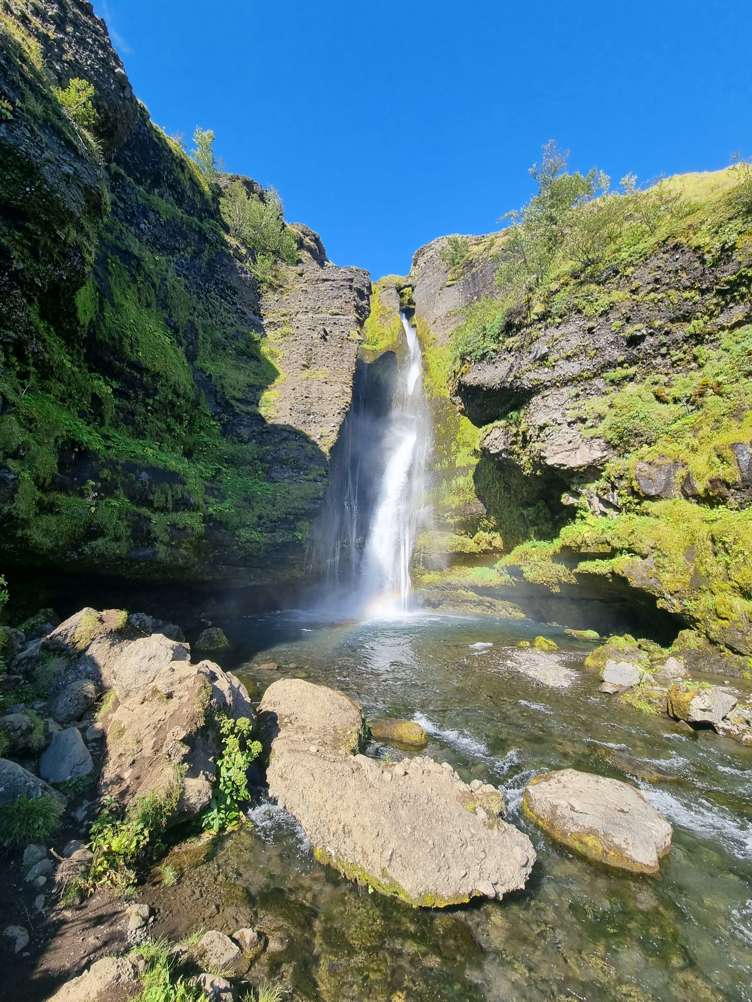
6. Stjórnarfoss: A Beautiful Waterfall Along the Stjórn River
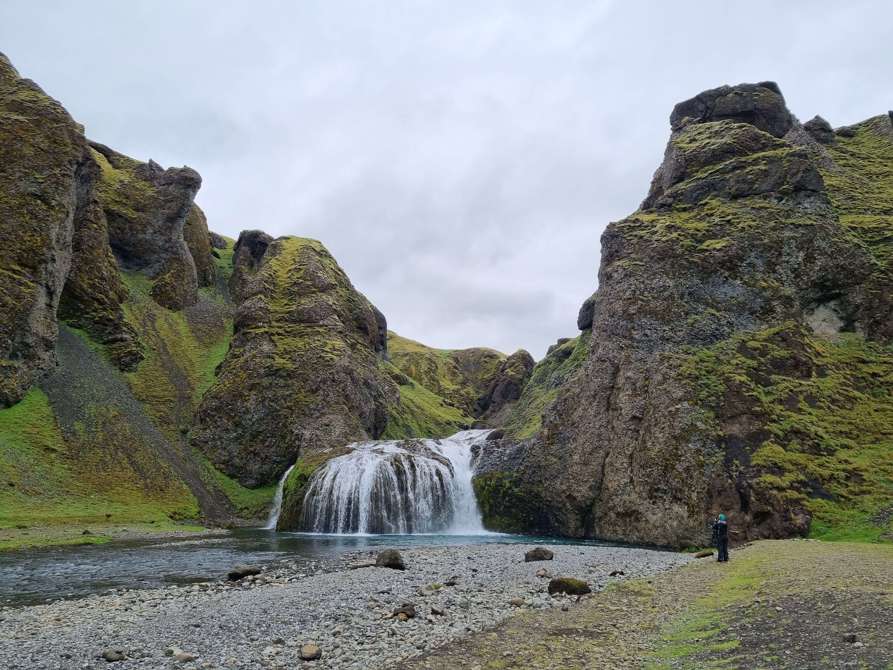
Located just outside the sweet village of Kirkjubæjarklaustur, Stjórnarfoss is one of the beautiful natural attractions within Katla UNESCO Global Geopark.
Fed by the Stjórn River, this picturesque waterfall cascades over a distinctive rock formation, creating an almost circular curtain of water. Its elegant shape and peaceful surroundings make it a wonderful photography location and a lovely stop when exploring eastern side of Katla Geopark!
Unlike some of the more crowded waterfalls along Iceland's South Coast, Stjórnarfoss often offers a quieter opportunity to enjoy the surrounding landscape. Further, the waterfall is particularly beautiful during the summer, when the surrounding vegetation is green and the river flows through the landscape beneath the mountains.
Stjórnarfoss is a continued example of the relationship between flowing water and volcanic rock formations in South Iceland.
The surrounding landscape reflects the region's volcanic origins, with geological processes and erosion shaping the rock formations over time. For instance, as the Stjórn River flows across the landscape, it continues to shape its channels and the waterfall itself. Basically, This interaction between water and volcanic geology is part of what makes the region so fascinating from a geological perspective.
Stjórnarfoss is also recognized as a Geosite within Katla UNESCO Global Geopark, making it an especially meaningful stop for visitors interested in understanding the area's geological heritage.
Visitor Tip: Stjórnarfoss is easily accessible from Kirkjubæjarklaustur and makes a lovely addition to a road trip through eastern Katla Geopark. Take time to appreciate the distinctive shape of the waterfall and the surrounding geological landscape.
7. Foss á Síðu: A Waterfall Framed by the Icelandic Countryside
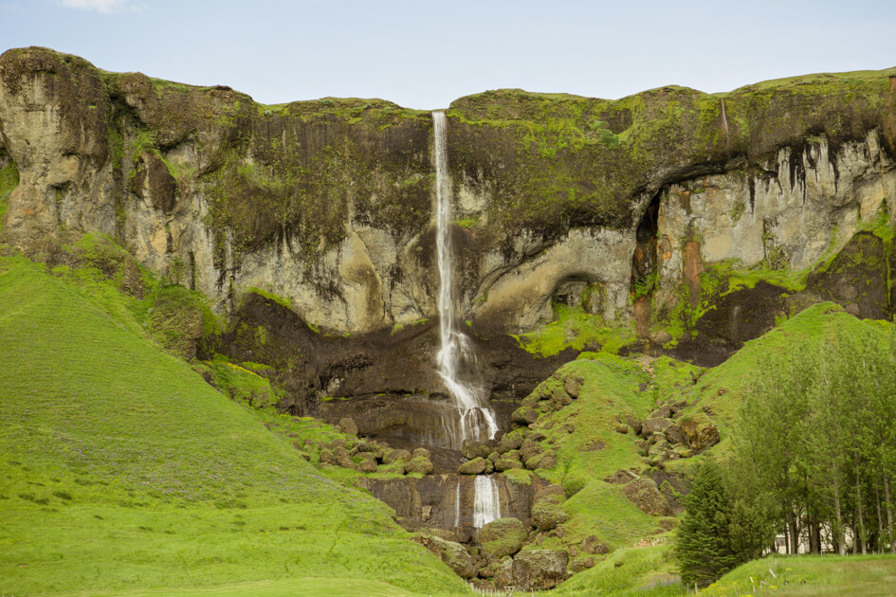
Our final waterfall is one of the most picturesque sights in eastern Katla Geopark. Foss á Síðu is located approximately 10 kilometers east of Kirkjubæjarklaustur. However, unlike waterfalls surrounded by dramatic canyons or towering volcanic cliffs, Foss á Síðu is framed by a beautiful rural landscape, with traditional farms and green vegetation beneath the surrounding rock formations.
The water cascades down the cliffs from Þórutjörn, a lake situated above the waterfall. Its setting makes it particularly beautiful for photography, especially when the surrounding landscape is green and the waterfall contrasts against the dark rock.
Celebrating Earth Heritage
How to visit the Katla Geopark
Katla UNESCO Global Geopark is in central South Iceland